Raya: Atria's AI Marketing Agent
Background & Objectives
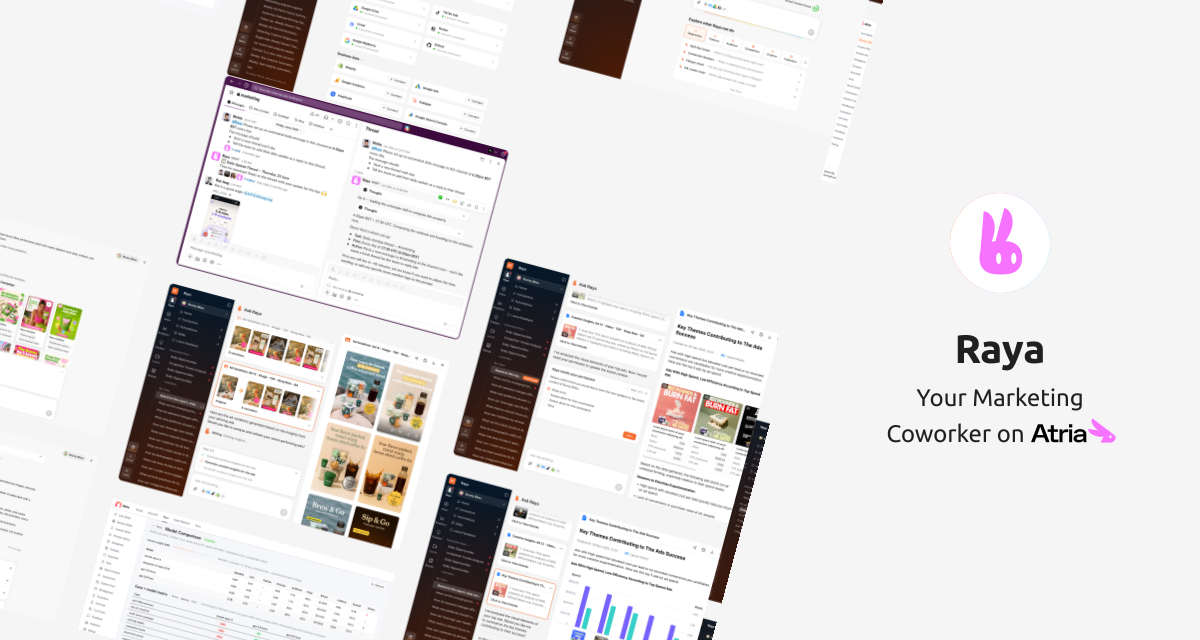
Atria is a leading marketing SaaS platform for paid advertising, bringing performance analytics, creative production and competitive intelligence into one workspace. Yet the experience was fragmented: each capability lived on a different page, context was lost between steps and users still had to assemble the final decision themselves.
Our project objective for Raya was not to add a chatbot to the existing platform. It was to turn Atria into a marketing operating system: one continuous, context-aware workflow that could observe performance, explain what was happening, recommend the next move, create the required work and safely repeat it over time.
Role & Responsibilities
2026 Product Manager & Roadmap Owner
- Owned Raya's product vision, strategy, sequencing and cross-functional roadmap
- Translated marketer workflows into an agent architecture spanning orchestration, skills, tools, memory and artefacts
- Defined the experience across web, Slack, human approvals and scheduled automations
- Connected permissions, run visibility, evaluation, usage and GTM signals back into product decisions
Research & Gap Analysis
One workflow was fragmented across the product. Users had to navigate different interfaces and uneven feature availability across entry points to understand ad performance, analyse creative and create the next ad. Each hand-off broke the decision thread, leaving users to reconstruct the context and conclusion themselves.

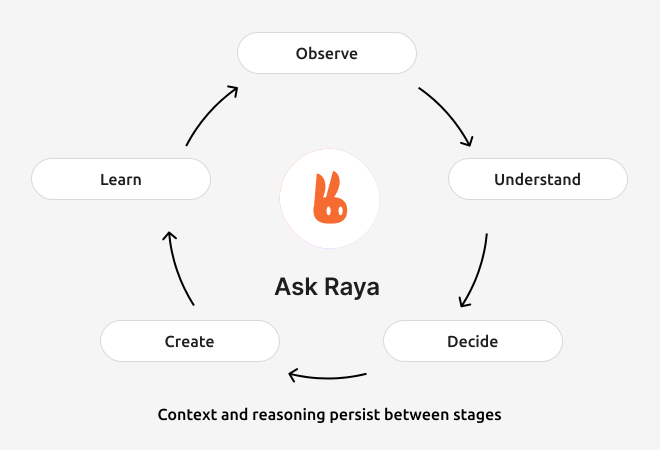
Raya created one continuous decision loop. It connected the workflow of observing performance, understanding why, deciding what to do, creating and learning. Instead of replacing Atria’s existing products, the AI agent chatbot became the operating layer that carries context and reasoning from one step to the next. The conversational experience keeps the entire decision chain in a single thread, making it easy to follow the supporting context, conclusions and resulting actions.
Product Strategy
The north star was clear: Raya should connect Atria’s data, intelligence and creative capabilities into one accountable marketing workflow.
The solution was not decided upfront. We shipped bounded workflows, studied errors and usage, then simplified or expanded the system based on evidence. Five strategies emerged:
- Orchestrate first, specialise selectively
- Context as a product layer, not a larger prompt
- Chat as the control plane, connectors and artefacts deliver the work
- Build habit loop through proactiveness
- Make every run observable and improvable
Orchestrate first, specialise selectively
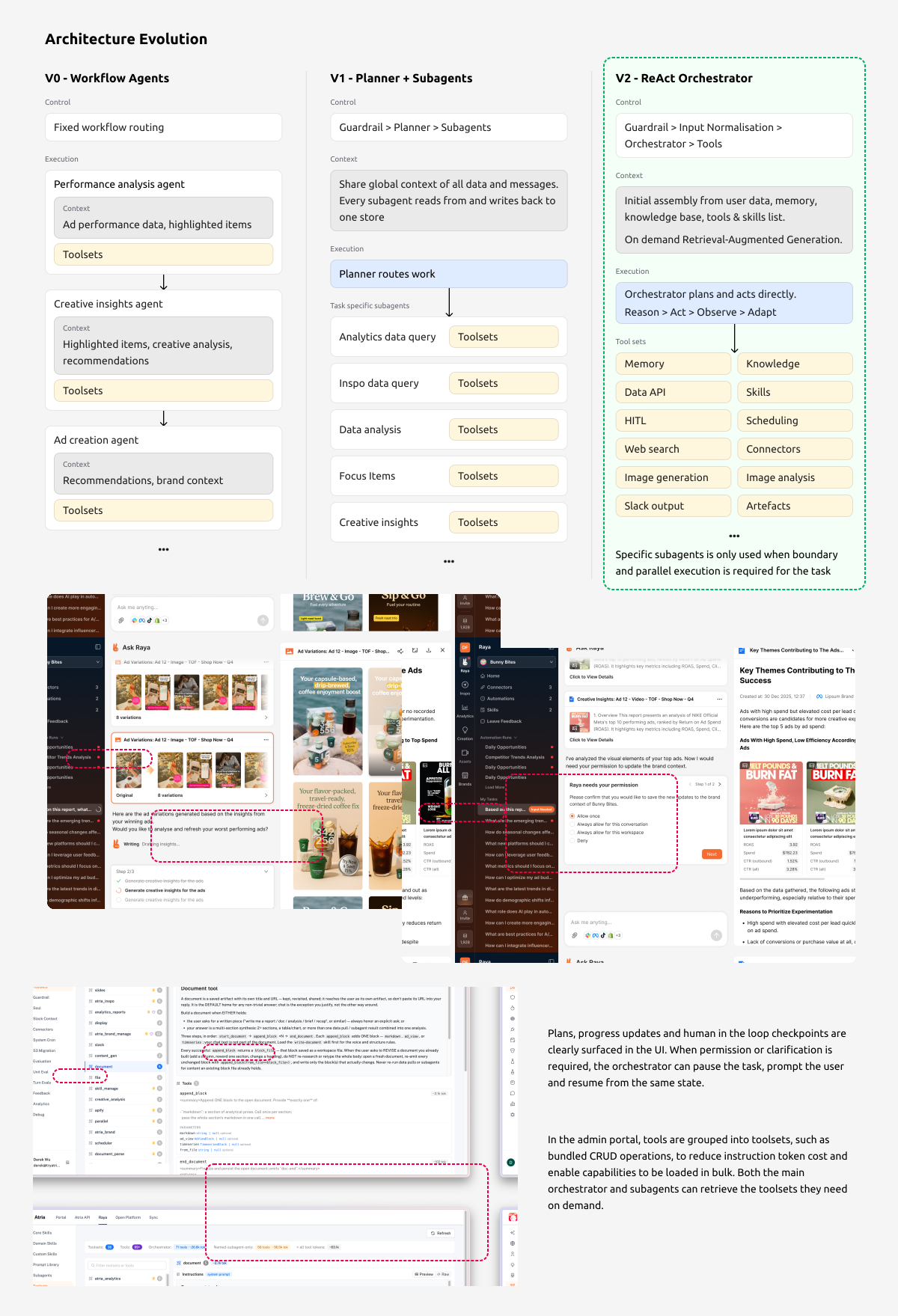
The architecture of Raya evolved from rigid task-specific subagents to a ReAct orchestrator that reasons, acts and adapts through composable tools, delegating only when a specialist boundary clearly improves reliability, safety or performance.
Testing revealed three things:
- What worked: bite-sized tools, on-demand skills, a flexible planner and strong workflow examples gave the model reusable building blocks without prescribing every path.
- What did not scale: task-specific subagents created rigid boundaries, repeated context and more routing decisions.
- What changed: stronger base LLMs became better at reasoning across tool results, choosing the next action and synthesising outcomes.
Context as a product layer, not a larger prompt
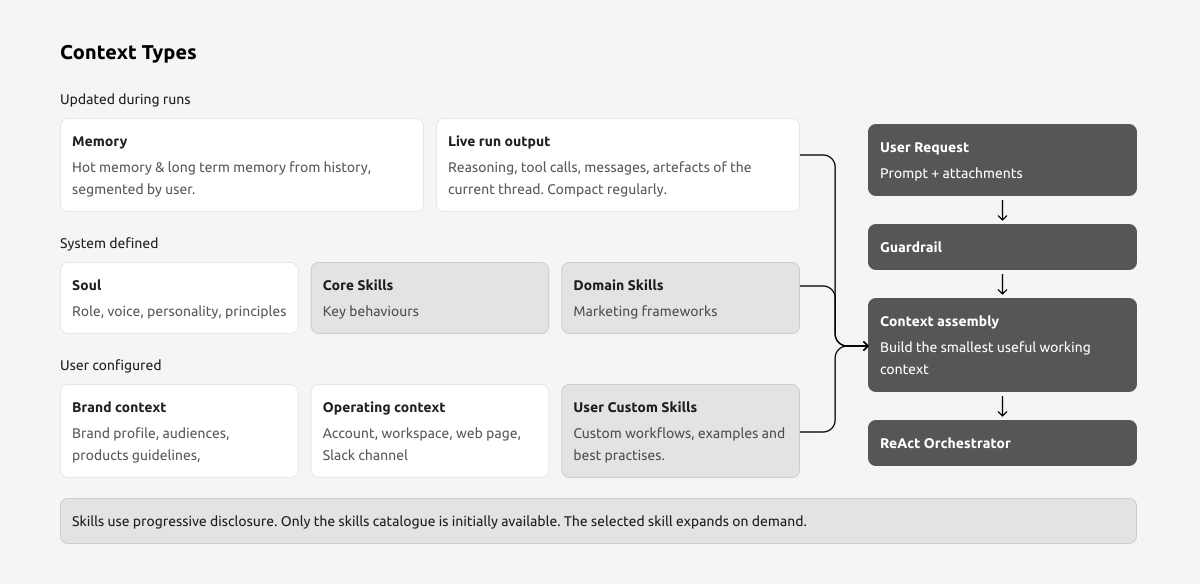
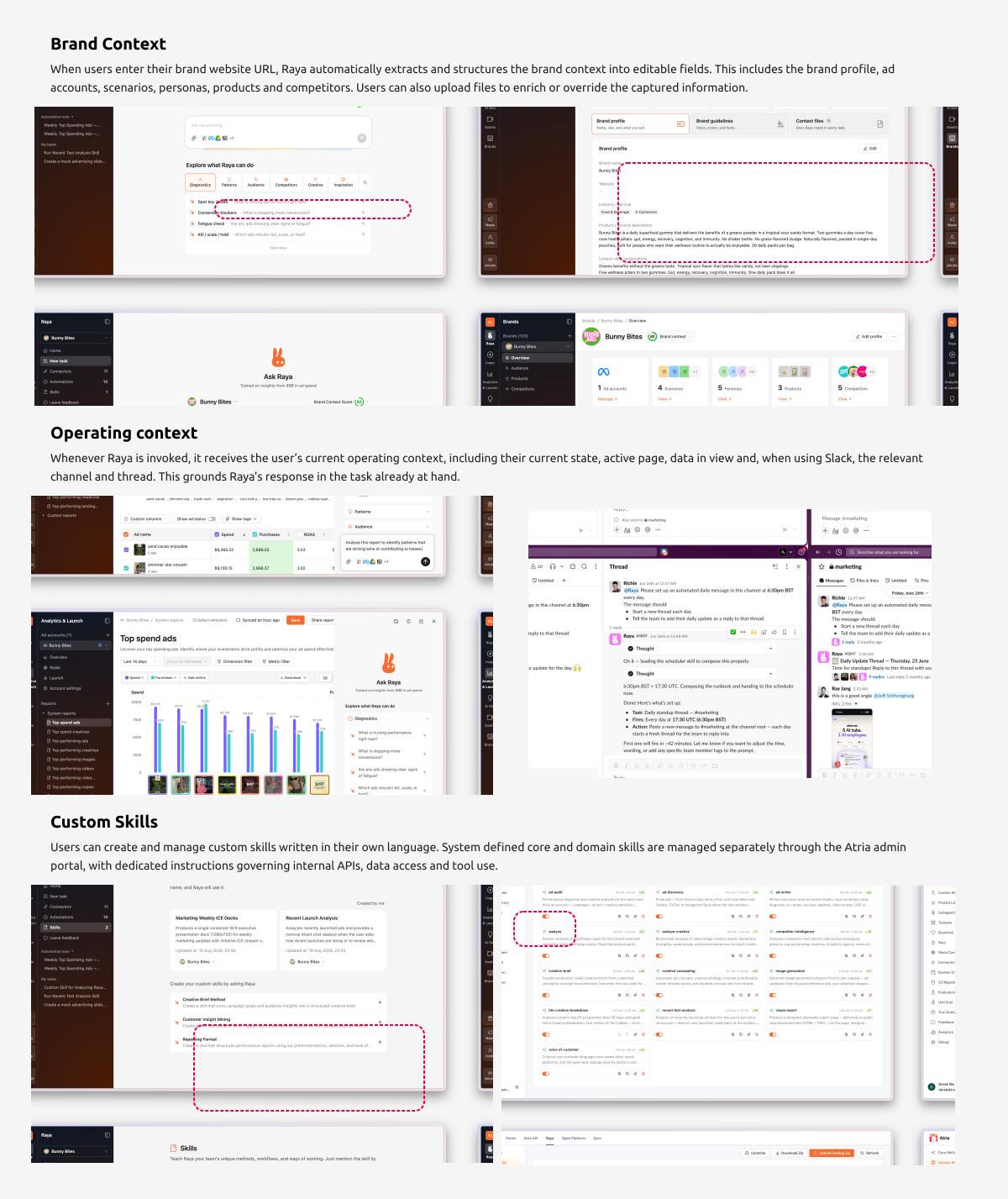
A general AI agent was not Atria’s competitive advantage. The advantage came from assembling proprietary marketing context at the right moment, with the right permissions, without overwhelming the model’s working space.
Raya assembles the smallest useful context for every request from what evolves during the run, what Atria defines and what the user configures. This lets one agent stay deeply relevant across brands, pages and Slack threads without bloating the prompt.
Chat as the control plane, connectors and artefacts deliver the work
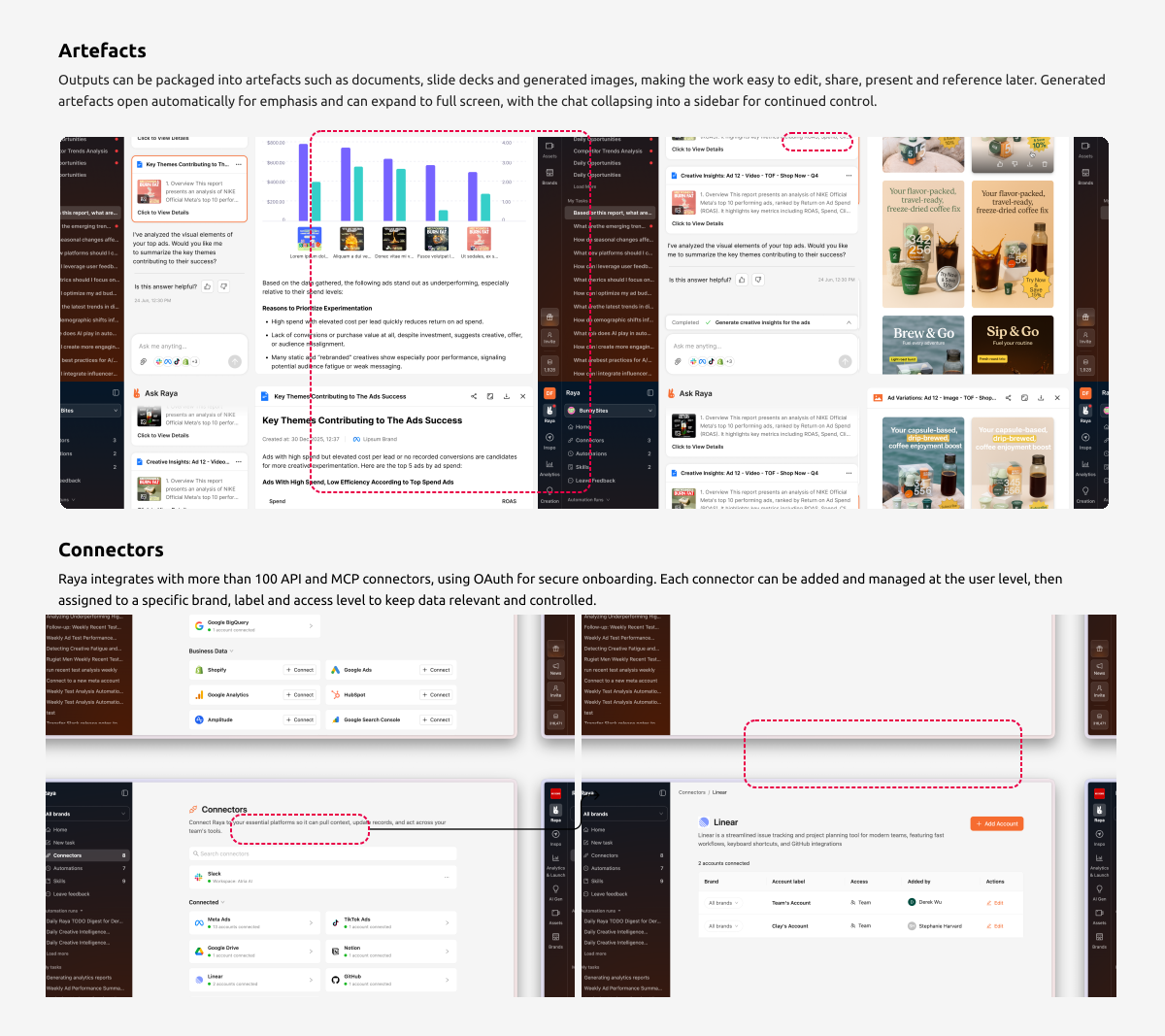
To move beyond a generic chatbot, we designed Raya as an agent that delivers presentable, reusable work. Chat keeps the decision chain visible and under control, while artefacts make outputs durable and connectors bring business data in and carry approved actions out.
Build habit loop through proactiveness
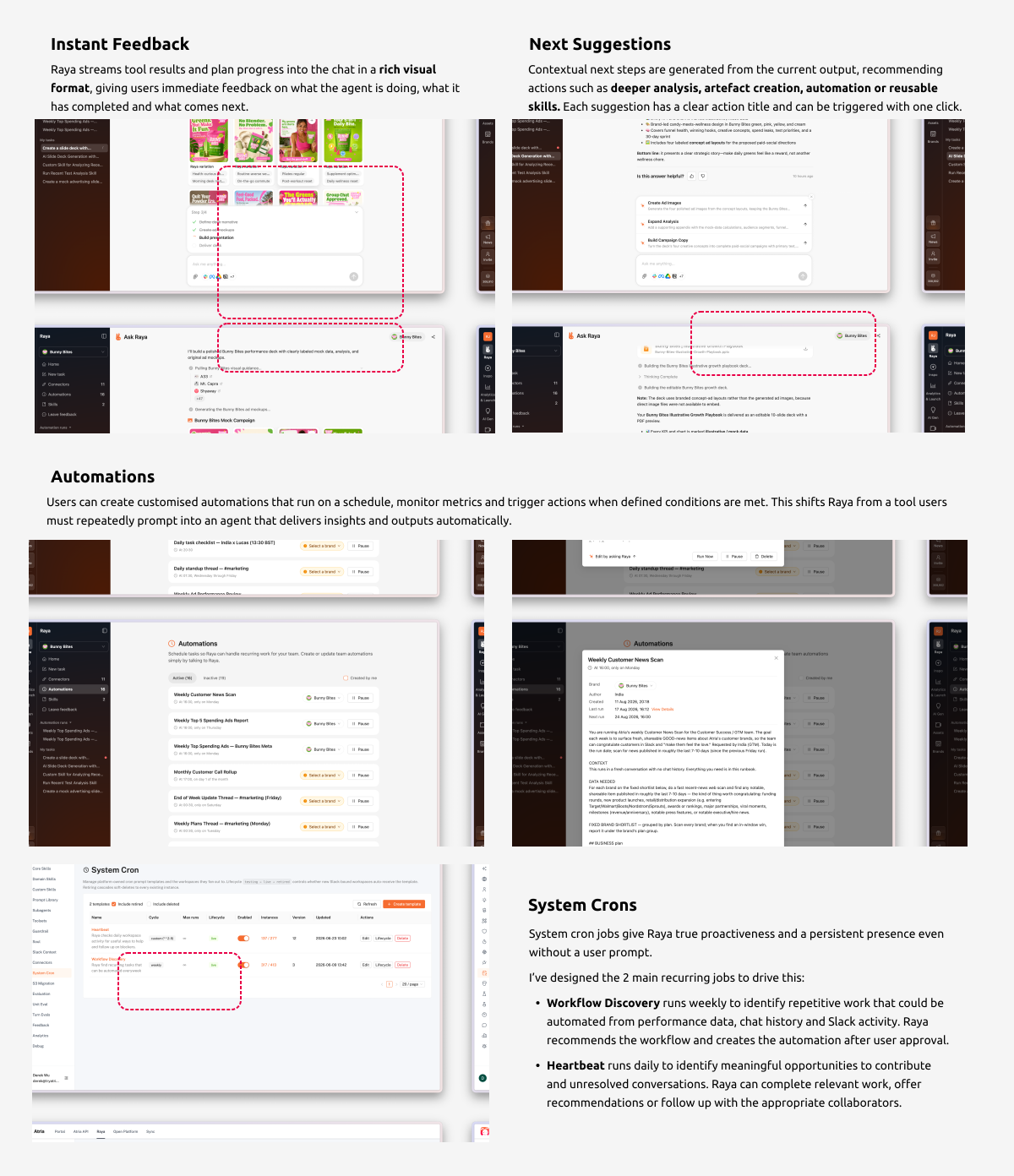
Building lasting usage meant moving Raya from a tool users remember to prompt into a proactive part of the team’s operating rhythm. Visible progress builds trust in the moment, while contextual next steps and recurring work create reasons to continue and return.
Make every run observable and improvable
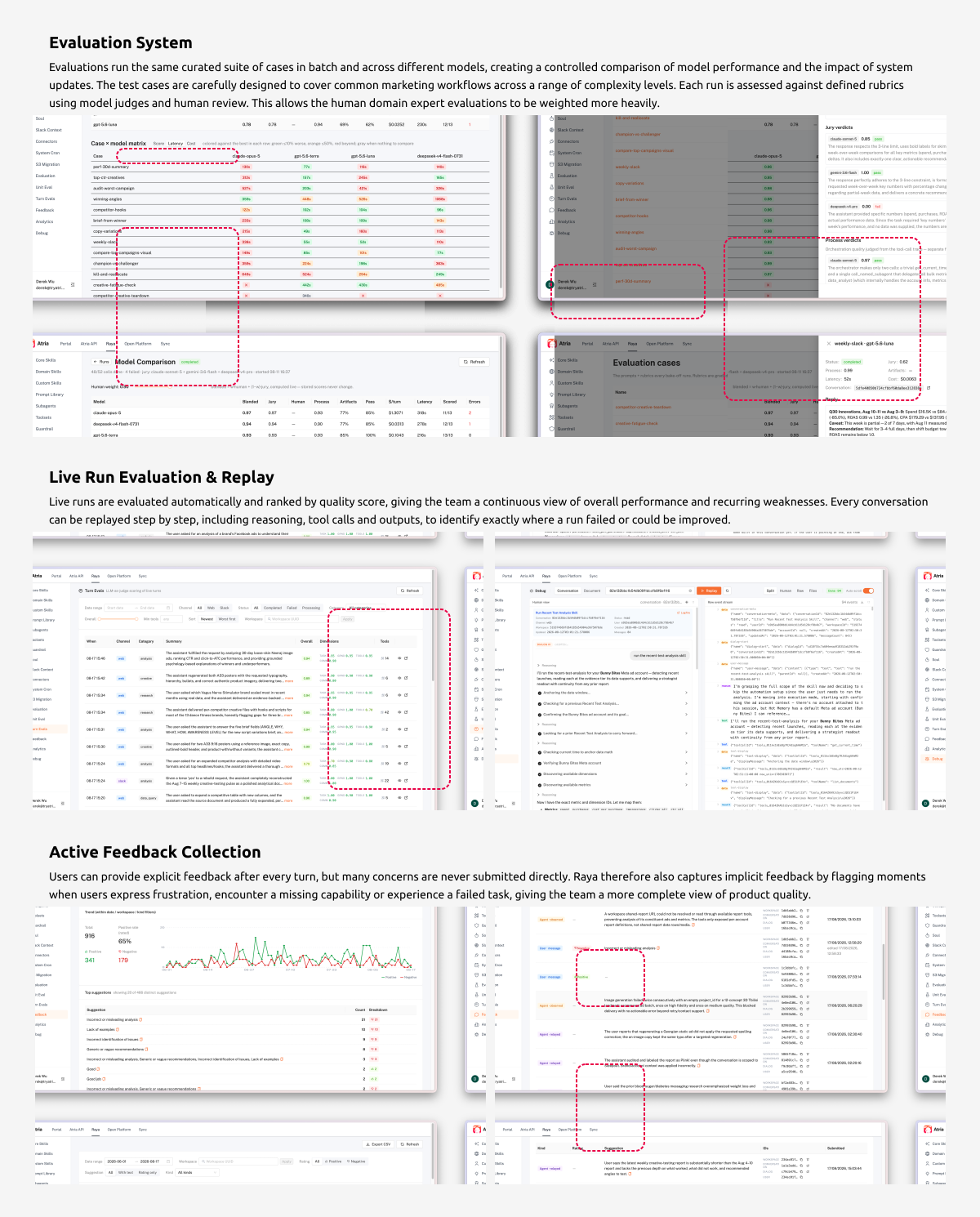
An agent can only improve if its decisions are measurable and reproducible. We designed every run as product evidence, creating a continuous quality loop from controlled evaluation and live monitoring to diagnosis, feedback and system improvement.
GTM and Performance Evaluation
We positioned Raya as an AI creative strategist rather than a generic assistant. The promise was specific: understand what worked, explain why and help the team create what comes next.
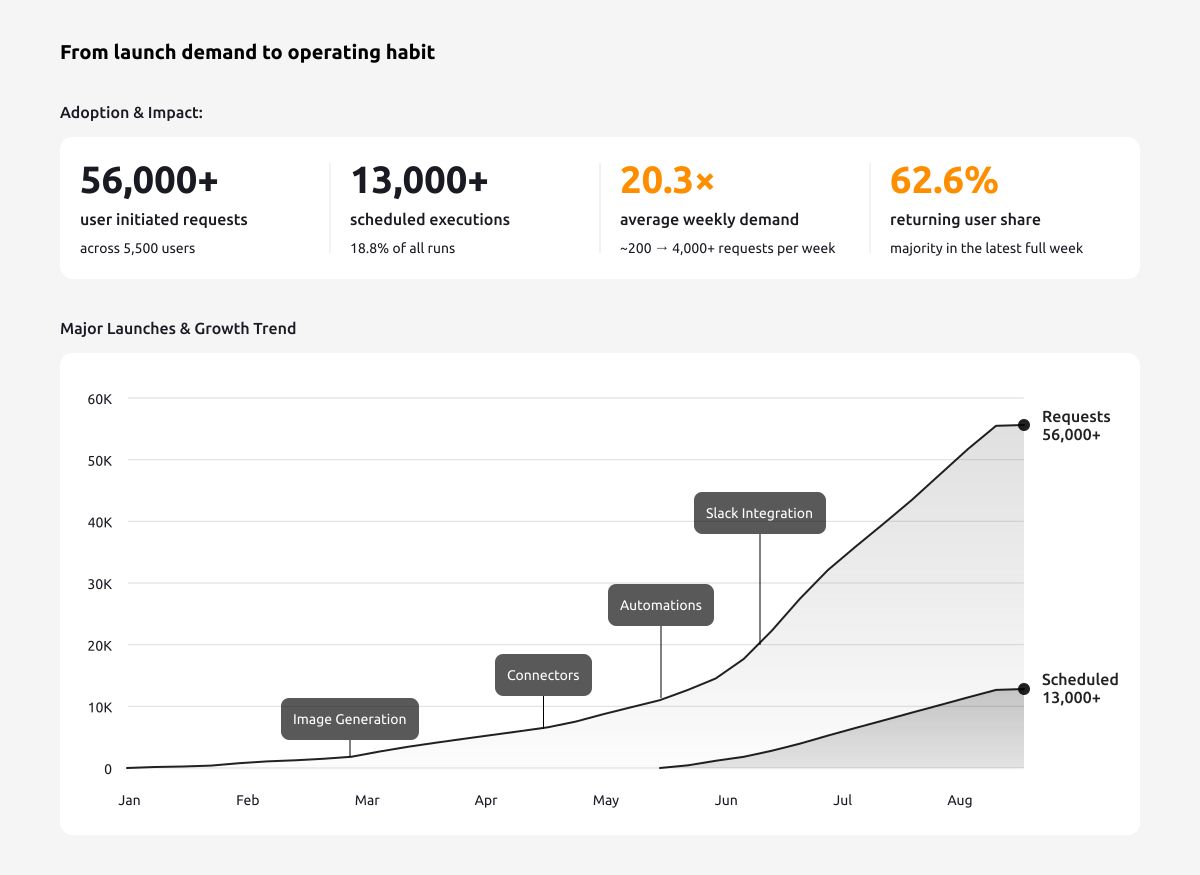
We treated every major release as a new growth lever. Slack moved Raya into daily collaboration, connectors unlocked live business context and automation turned individual tasks into recurring behaviour. Usage stepped up after each launch and sustained at a higher baseline, validating the strategy of expanding distribution, utility and habit together.
To amplify each release, I established an email and social media campaign pipeline spanning product education, use cases, launch announcements and reactivation. Each campaign connected a concrete user problem to prompts and workflows that could be tried immediately, turning product releases into measurable moments for acquisition and repeat usage.