Lylo AI Car Check
Background & Objectives
Lylo operates Singapore’s largest car-rental fleet and aims to become the country’s leading mobility platform, starting with car-sharing and short-term rental across web, iOS and Android. Car collection and return are critical moments in that journey, but manual inspections were slow, inconsistent and expensive to operate.
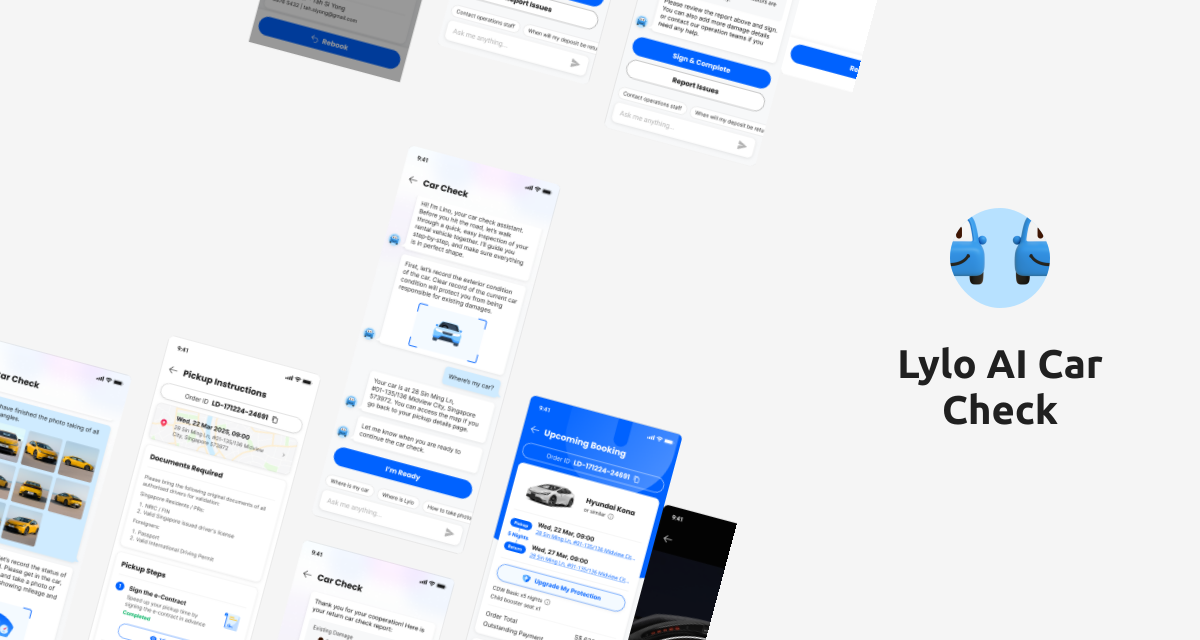
Lylo AI Car Check turns inspection into a guided self-service experience. It uses AI to detect damage, creates a clear condition report and connects customers with human support whenever confidence is low. The project was supported through IMDA’s GenAI x Digital Leaders initiative and featured in its 2025 Digital Leaders showcase.
Role & Responsibilities
2025 Lead Designer
- Defined the product vision for AI-assisted car checks, aligned with reducing waiting time and operating cost
- Turned journey research and operational constraints into clear AI product requirements
- Designed end-to-end workflows connecting image recognition, customer guidance and fleet operations
- Partnered with data scientists to improve training data and damage-detection accuracy
- Set success measures for completion time, report quality, support demand and customer trust
Preliminary Research
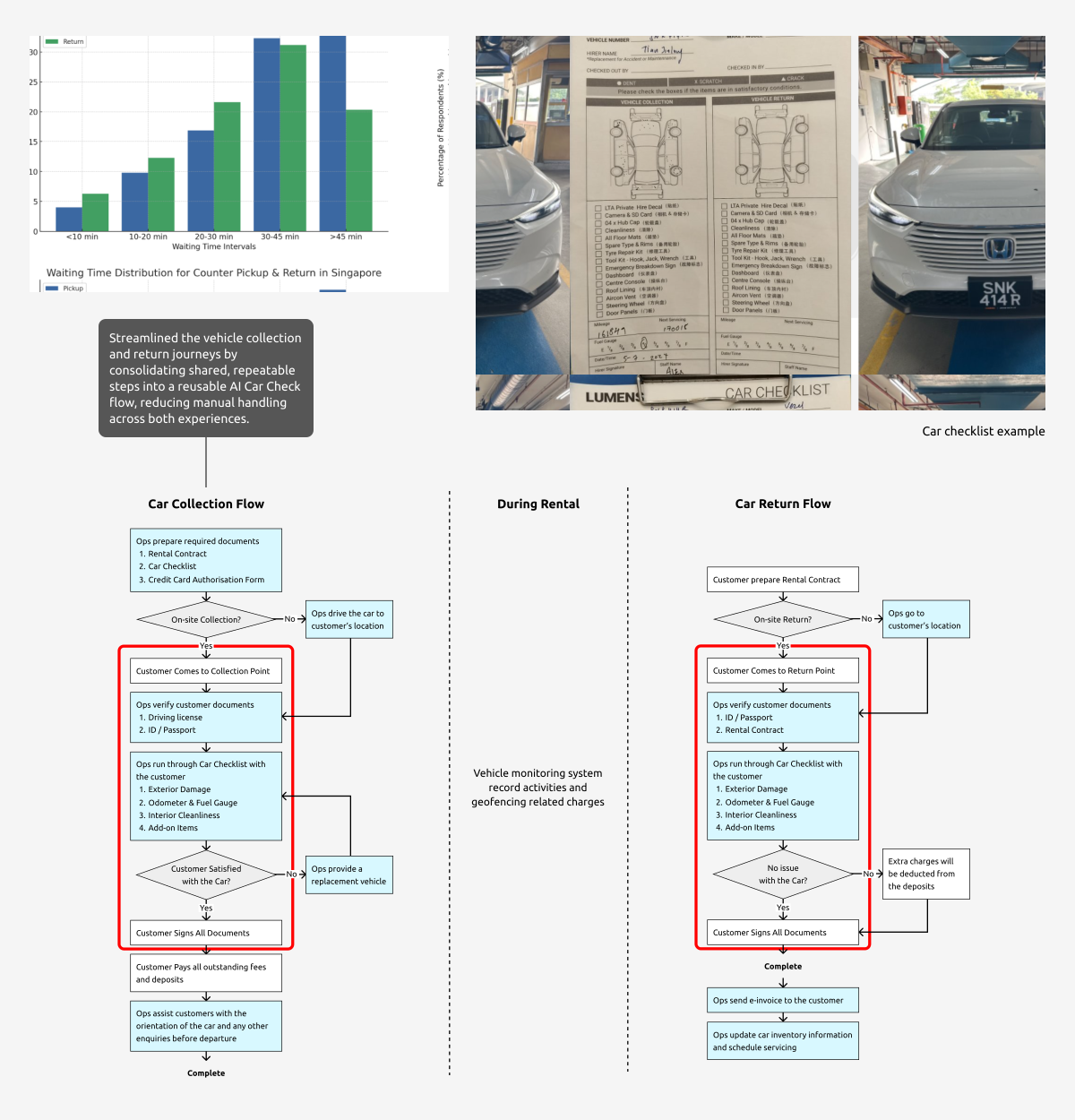
We mapped the end-to-end car collection and return journey to find problems where AI has a natural advantage: repeated visual inspection, consistent comparison and structured reporting. Waiting-time data in Singapore showed long queues during peak hours, while paper checklists often contained unclear markings, inconsistent photos and missing details.
Three opportunities made car checks a strong fit for AI:
- Automate repetitive inspection — AI can guide every customer through the same evidence-capture process without adding staff workload.
- Standardise visual judgement — computer vision can evaluate photos against consistent rules and locate possible damage precisely.
- Turn evidence into action — AI can organise photos and detections into a readable report, leaving staff to focus on exceptions.
Design Strategy
AI can improve car checks only when the experience balances operational control, explainable results and human judgement. We separated what must stay fixed from what should stay flexible, made every AI finding easy to verify and kept people in control whenever confidence was low.
- Fixed steps, open conversation
- Visualise complex data output
- Keep people in control
Fixed Steps, Open Conversation
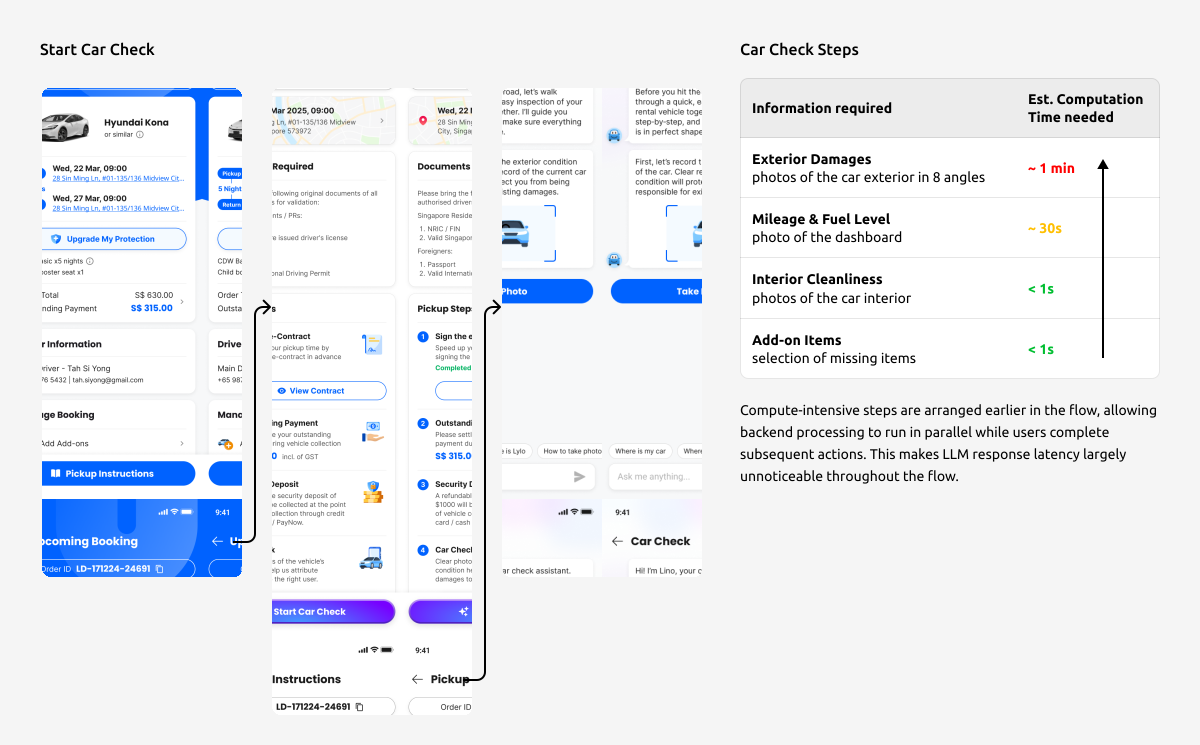
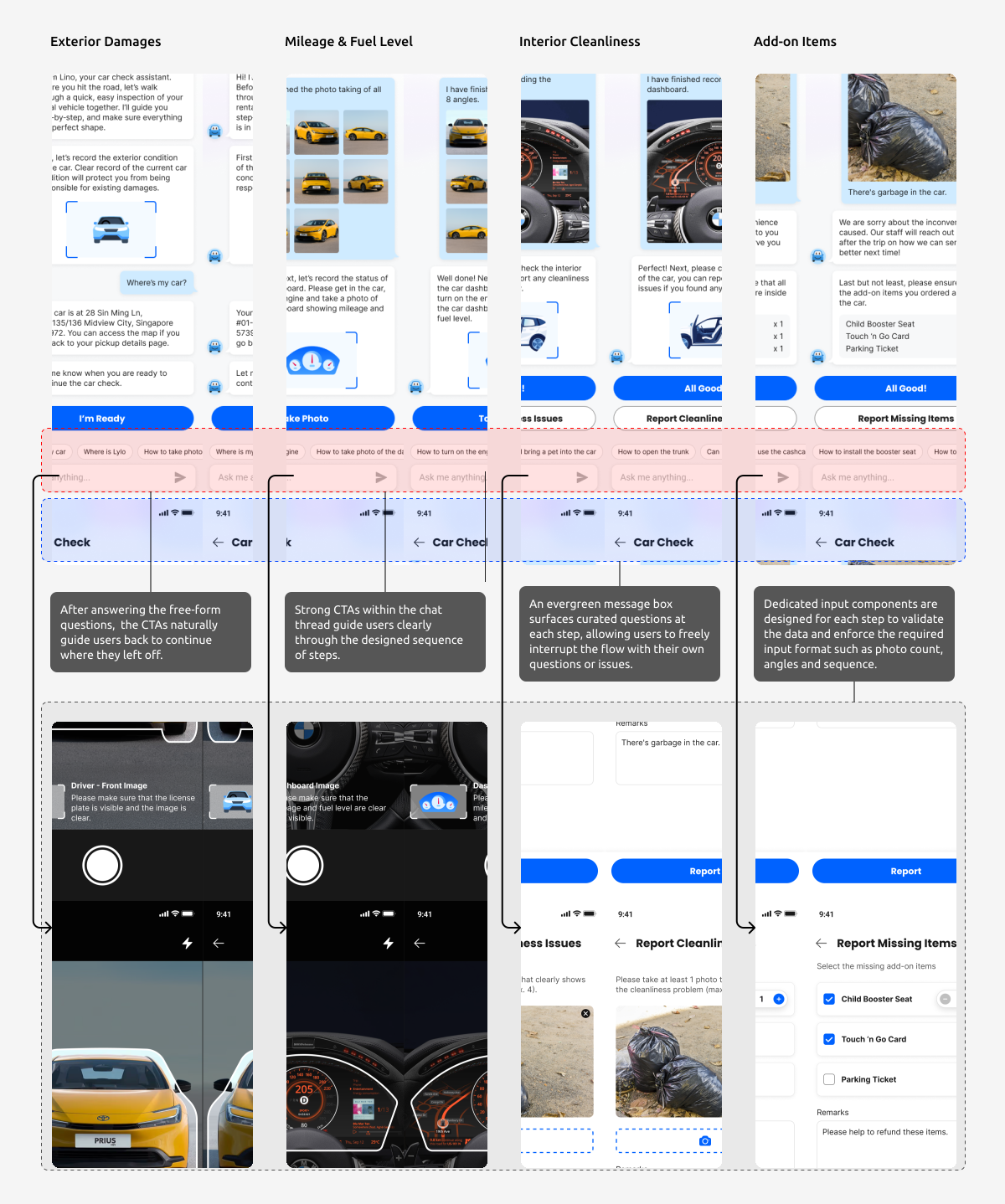

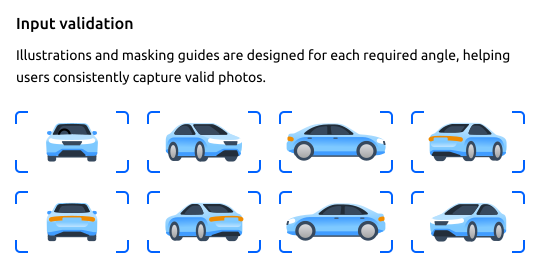

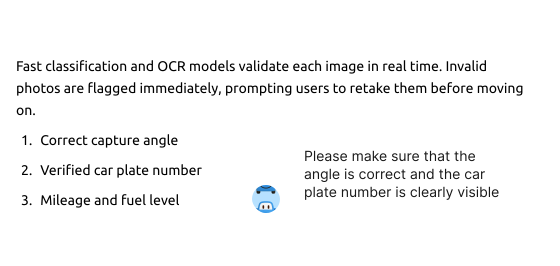
The inspection follows a carefully designed exterior-to-interior sequence. A controlled, fixed UI keeps every step smooth and friendly while validating the required evidence.
At the same time, open, flexible chat lets customers pause, ask questions and return to the exact step without losing progress. Together, they ensure every required input is validated and support is always within reach.
Visualise Complex Data Output
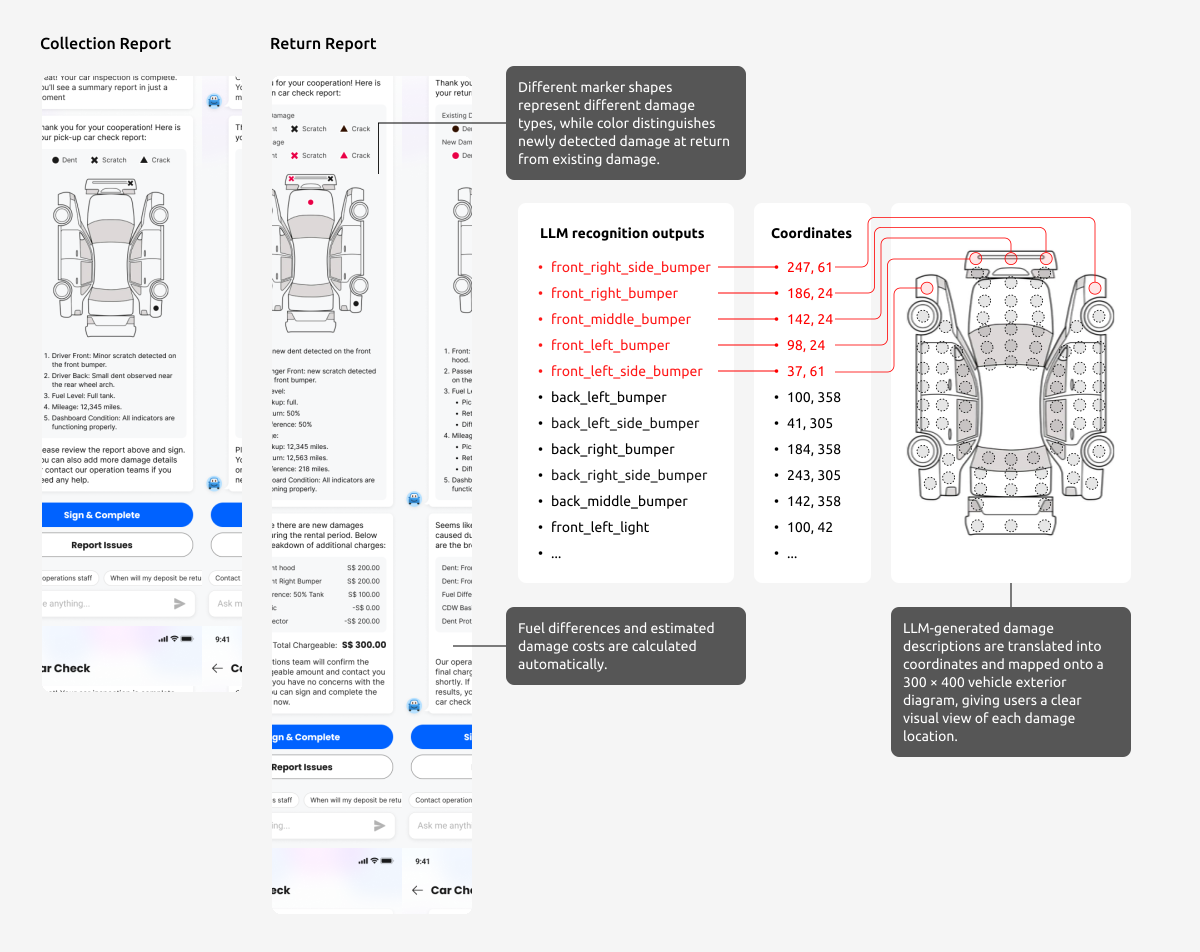
Computer vision returns coordinates, labels and confidence data—not information customers should have to interpret. The interface translates each detection into a precise marking on a familiar car exterior plan and keeps it connected to its source photo and inspection step.
The system then consolidates every finding into one readable condition report. Turning technical output into clear visual evidence makes the AI easier to verify, explain and act on.
Keep People in Control
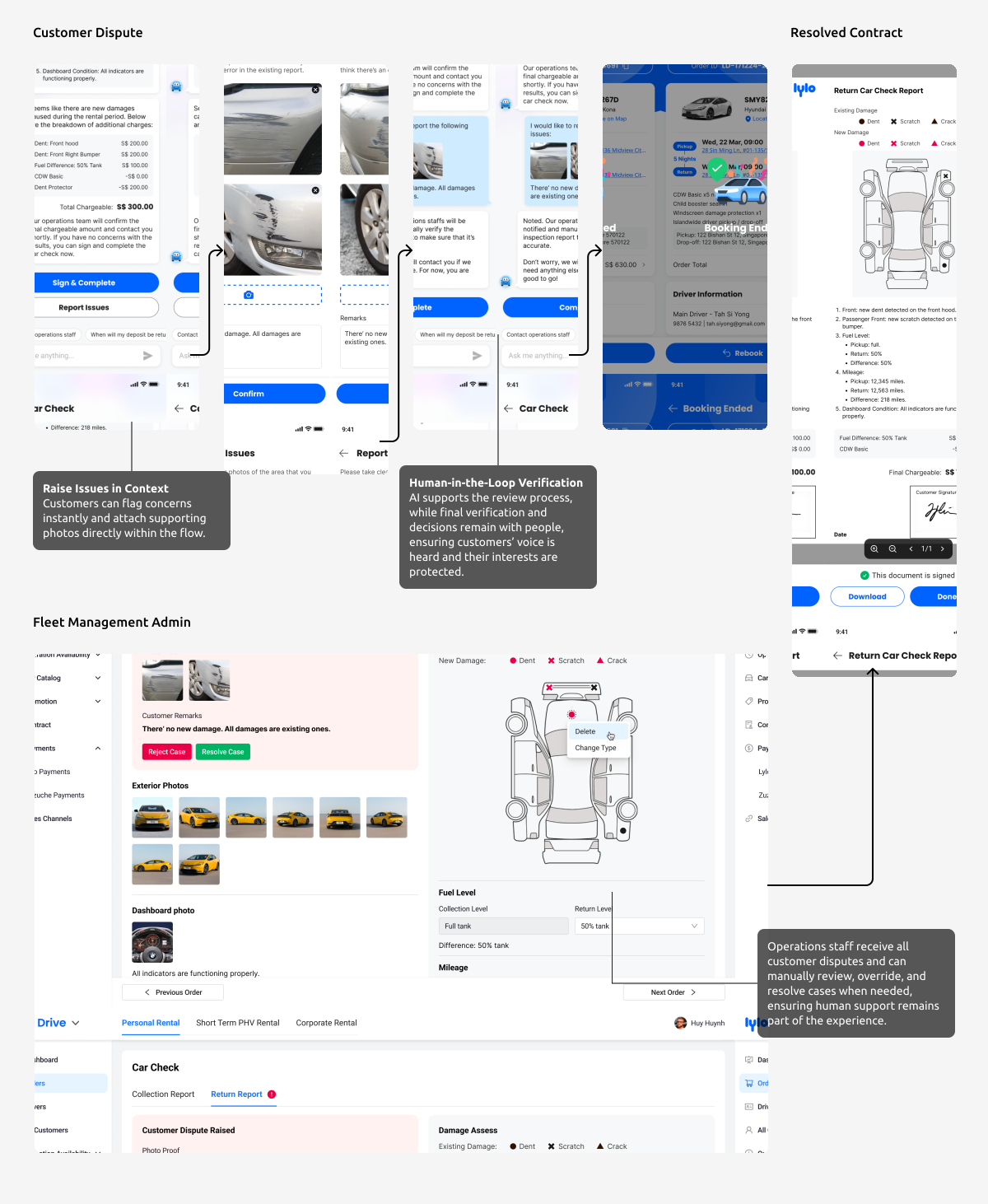
AI proposes; people decide. Before submission, customers can review every finding, correct a mismatch, flag missing damage and attach additional proof without leaving the flow.
Flagged reports notify the operations team in the fleet management system for manual verification. While a case is under review, the experience defaults to protecting the customer. This balance keeps accountability human and builds confidence without slowing down every inspection.
Performance Evaluation
The project was supported through IMDA’s GenAI x Digital Leaders initiative and featured in its 2025 Digital Leaders showcase.
The solution achieved 75% reduction in vehicle processing time, allowing the business to handle more vehicles without increasing manpower.
The following measures are proposed for ongoing evaluation:
- Target: >70% self-service completion without staff assistance.
- Target: >90% first-pass report acceptance without manual correction.
- Target: ≥4.5/5 customer confidence after completing a car check.